
Your Sprinkler System Probably Has a Problem
Here’s How to Know
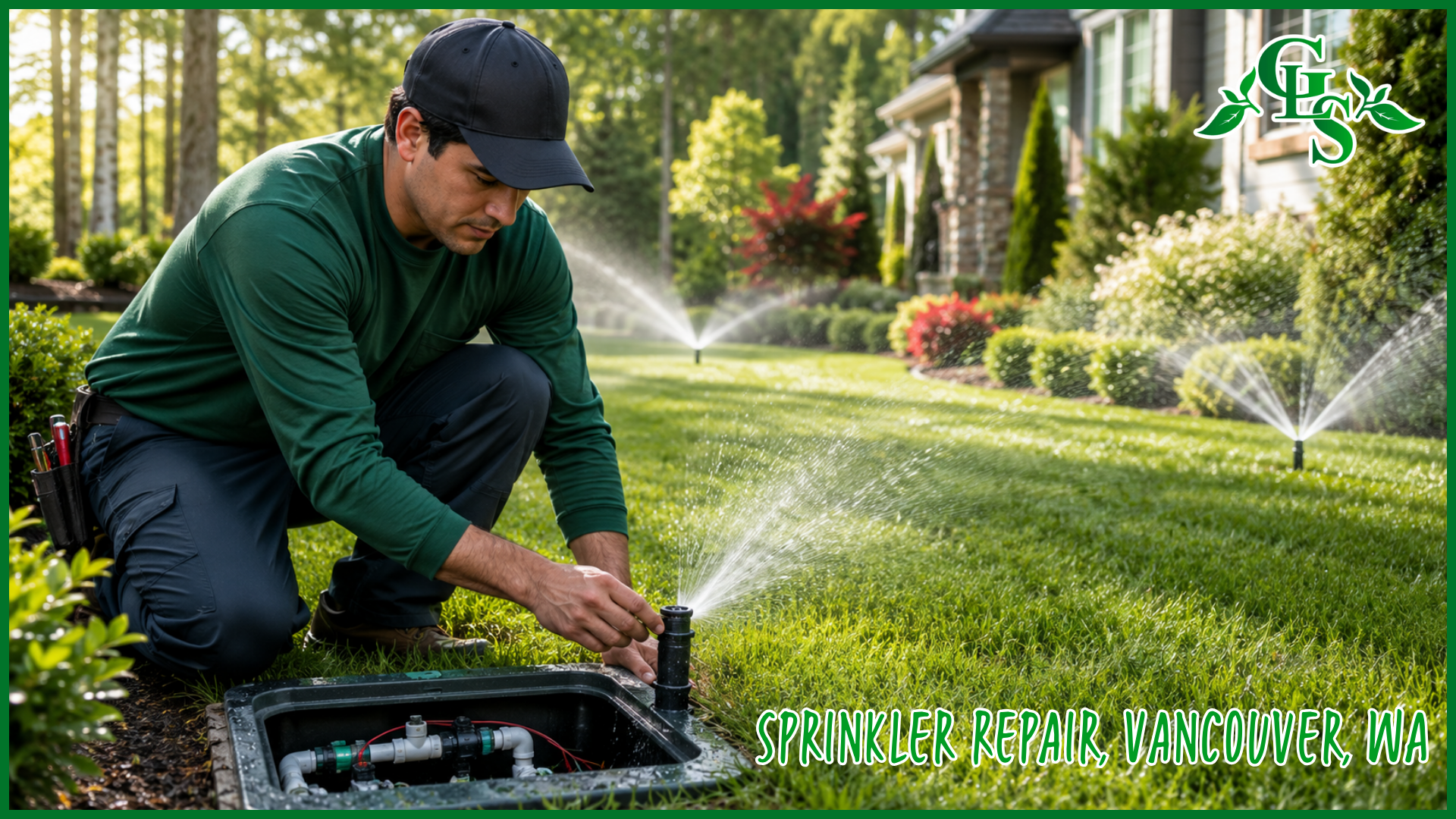
I get more calls in April and May than at any other time of year. Homeowners fire up their irrigation system after winter, something doesn’t work right, and suddenly they’re staring at a soggy patch of lawn or a zone that won’t turn on at all.
I’ve been running irrigation systems across Vancouver and Clark County for 15 years. What I can tell you is this: most spring irrigation problems were preventable. And most of them are fixable faster than people think.
Key Takeaways:
- Vancouver’s freeze-thaw winters are hard on irrigation systems, even in mild years
- Spring startup is the best time to catch problems before they waste water all summer
- The most common issues are cracked heads, stuck valves, and pressure problems
- Skipping winterization is the single most expensive mistake homeowners make

Written by Juan Garcia
Founder of Garcia’s Landscaping Services
Vancouver’s premier landscaping service.
Table of Contents
Why Spring Is the Most Important Time for Your Sprinkler System
Here in Vancouver, our winters aren’t always brutal. But they’re wet and cold enough to do real damage to irrigation systems that weren’t properly shut down.
Water left in pipes and heads can freeze, expand, and crack things you can’t see underground. You won’t know the damage happened until you turn the system on in spring and something’s wrong.
Catching it early matters. A cracked head that goes ignored for a month wastes water every cycle. A valve that won’t close is driving up your bill without you knowing. The sooner you check, the less it costs you.
What I Look for During a Spring Irrigation Checkup
When I do a spring startup, I don’t just flip the switch and walk away. Here’s what I actually look at.
Each zone gets tested individually. I watch every head pop up, see how far it rotates, and check that coverage is even. If a head is clogged, tilted, or broken, I find it now instead of after it’s killed a section of your lawn.
Pressure matters. Too much pressure and heads mist instead of spray. Too little and the coverage is uneven. A pressure issue usually points to a valve problem or a regulator that needs adjustment.
The control box gets checked, too. I make sure the schedule makes sense for early spring in the Vancouver climate, which is different from peak summer. You don’t need to water as much in May as you do in August. A lot of homeowners set their systems in spring and forget about them all summer.
I look for soft spots in the lawn. A soggy area that shouldn’t be wet is usually a broken pipe underground. Catching it at startup saves a much bigger repair later.
The Most Common Sprinkler Problems I See Every Year
After doing this for 15 years in this market, the same problems show up every spring.
Broken or tilted heads.
This is the most common one. Heads get hit by lawn mowers, walked on, or shift over winter. A broken head wastes a lot of water fast. A tilted head waters the sidewalk instead of your grass.
Stuck valves.
Valves can get stuck open or stuck closed over winter. A valve stuck open means one zone runs constantly. A valve stuck closed means one zone never runs at all. Either way, your lawn suffers.
Pressure issues.
I had a customer last spring who thought his whole system was broken. It was a pressure valve that had shifted slightly in one of his underground boxes. That’s a quick fix if you know where to look, but it took him all winter to figure out something was wrong.
Clogged heads.
Dirt and debris get inside heads over winter. When they clog, spray patterns go off in the wrong direction or stop altogether. I clean them out during startup so they spray true.
Controller settings that don’t match the season.
This isn’t a break; it’s a setup issue. Spring in Vancouver is still rainy enough that you don’t need to run your system every day. Many homeowners are overwatering in May without realizing it.
Did you know… According to the EPA’s WaterSense program, the average household can waste up to 25,000 gallons of water per year from an inefficient irrigation system. In Vancouver, where summer water bills already climb, a simple spring checkup and controller adjustment can significantly reduce waste and lower your bill.
What Happens When You Skip Winterization?
I’ll be direct with you: skipping a sprinkler blowout is the most expensive mistake I see homeowners make.
When water freezes inside your pipes, it expands. Pipes crack. Heads crack. Valves crack. None of this is visible from the surface. You find out in spring when the system doesn’t work right, and you’re looking at repairs that could have been prevented for the cost of one blowout service.
Our winters here in Clark County get cold enough to cause this damage. It doesn’t have to be a hard freeze for several days. One or two overnight freezes on a system that still has water in it can do real damage.
I offer irrigation winterization every fall for exactly this reason. The blowout takes less than an hour. The repairs it prevents can take half a day and cost several times more.
Should You Fix It Yourself or Call Someone
Some things you can handle yourself. A tilted head that’s just crooked? You can push it back into position. A clogged nozzle? You can pop it out, rinse it, and put it back.
But here’s what I tell my customers: irrigation systems have many moving parts underground. If the problem isn’t obvious from the surface, digging around without knowing what you’re looking for can make things worse.
I’ve seen homeowners accidentally cut a line trying to find a leak. I’ve seen people replace the wrong valve and still have the same problem. The underground part of the system is where it gets complicated fast.
If your system has a zone that won’t run, pressure that seems wrong, or soft spots in the lawn with no obvious cause, call someone who knows irrigation. It’s almost always a faster and cheaper fix than spending a weekend guessing. Take a look at our irrigation services page to see everything we handle.
The Bottom Line
Your sprinkler system works hard for you all summer. Spring is when you make sure it’s ready.
Check each zone. Watch the heads. Look at your pressure. And if something seems off, get it looked at before the dry weeks hit in July and August, because that’s when a broken zone really hurts.
If you’re in Vancouver or the surrounding area and your system needs a spring startup, a repair, or a full checkup, reach out to us for a free estimate. I’ll come take a look and tell you exactly what’s going on.
Frequently Asked Questions
When should I turn my sprinkler system back on in Vancouver, WA?
Most years, late March to mid-April is the right window. The ground has thawed, and we’re heading into the drier stretch. I wouldn’t turn it on during a cold snap. Wait for a stretch of consistently above-freezing nights before firing it up.
How long does a spring irrigation startup take?
A basic startup and zone check on a typical residential system takes about 45 minutes to an hour. If I find problems, repairs add time. I always give you an honest estimate before starting anything.
My sprinkler head is spraying sideways. What does that mean?
Usually, it means the head is tilted, or the nozzle is clogged. Tilted heads can often be straightened by hand. If it’s clogged, the nozzle pops out and rinses clean. If it keeps happening, the head itself may be cracked and need to be replaced.
What is a sprinkler blowout, and do I need one in Vancouver?
A blowout uses compressed air to push all the water out of your pipes and heads before winter. Yes, you need one here. Vancouver gets cold enough that water left in the system will freeze, expand, and crack things. A blowout costs a fraction of what the repairs cost in spring.
How much does sprinkler repair cost in Vancouver, WA?
It depends on what’s broken. Replacing a head is a quick, low-cost fix. Fixing a cracked underground line takes longer and costs more. I give free estimates so you know what you’re looking at before we start.
Garcia’s Landscaping Services LLC serves Vancouver, WA, and the surrounding areas within 50 miles. Call (360) 984-7342 or contact us online for a free estimate.