When Should You Trim Trees in Vancouver, WA? A Fall Storm Checklist
What to Cut Now, What Can Wait, and When to Call for Help
Fall in Vancouver brings cooler weather, steady rain, and the first strong windstorms of the season. That makes October a smart time to look at the trees around your home before winter weather arrives.
But fall isn’t the right time for every kind of pruning. Some branches should come down now because they’re dead, damaged, or dangerous. Other pruning is better saved for the dormant season.
I’ve put together this practical checklist to help Vancouver and Clark County homeowners decide what needs attention now and what can wait.
Key Takeaways
- Remove dead, broken, diseased, or hazardous branches when you find them.
- Avoid heavy, unnecessary pruning in early fall.
- Look for limbs hanging over roofs, driveways, walkways, and outdoor living areas.
- Never work near power lines or climb a tree without the right training and equipment.
- Late winter is often a better time for major structural pruning.
By Juan Garcia, Founder of Garcia’s Landscaping Services LLC
Why Fall Tree Checks Matter in Vancouver
Western Washington windstorms can break tops and branches or bring down entire trees. Wet soil, heavy rain, snow, and ice can add even more stress. A branch that looked fine during summer may become a problem once it starts moving in strong wind or carrying extra weight.
This doesn’t mean every tree needs to be cut back. It means this is a good time to walk your property and look closely. Pay special attention to trees near your house, garage, fence, driveway, and the places where people regularly walk or sit.
If you want help evaluating the work, our tree services in Vancouver are available for homeowners throughout Clark County.
Did you know?
Washington State University recommends removing dead, damaged, diseased, or hazardous wood when it is found. Broad fall pruning is different because fresh cuts can heal more slowly during cool, damp weather.
Branches That Should Be Trimmed Now
Safety problems shouldn’t wait for the perfect pruning season. A dead or cracked branch can fail without much warning, especially during a windstorm.
Dead or Broken Branches
Look for branches with no living buds, peeling bark, visible cracks, or broken ends. A branch that is partly detached or resting on another limb needs prompt attention.
Diseased Wood
Discolored bark, unusual growths, decay, or dieback can be signs that part of a tree is unhealthy. Correct cuts may help keep the problem from spreading, but the cause should be identified before a large amount of material is removed.
Limbs Threatening People or Property
Branches over a roof, driveway, play area, patio, or walkway deserve a closer look. Watch for limbs that rub against the house, hang unusually low, or have changed position since last season.
Weak, Crossing, or Rubbing Branches
Branches that cross and scrape each other can create wounds. Weak attachments may also be more likely to split under wind, snow, or ice. Selective trimming may reduce the risk without stripping healthy growth from the tree.
You can see examples of the range of outdoor work we handle in our landscaping project gallery.
Pruning That Can Usually Wait
If a branch is healthy and isn’t creating a safety concern, there may be no reason to remove it in October. Major shaping and structural pruning are often better during dormancy, especially in late winter when the tree’s structure is easier to see and the most severe cold is nearly over.
Heavy fall pruning can encourage tender new growth that may be damaged by cold weather. Overthinning is another problem. Removing too many interior branches can leave the remaining limbs more exposed to wind.
| What You See | What to Do |
|---|---|
| Dead, cracked, or hanging branch | Address it promptly |
| Limb touching a roof or blocking a walkway | Evaluate and trim as needed |
| Healthy branch that only needs shaping | Consider waiting until dormancy |
| Large limb high in the canopy | Call a qualified professional |
| Branch near a power line | Stay away and contact the utility or an appropriate tree professional |
Your Fall Storm Checklist
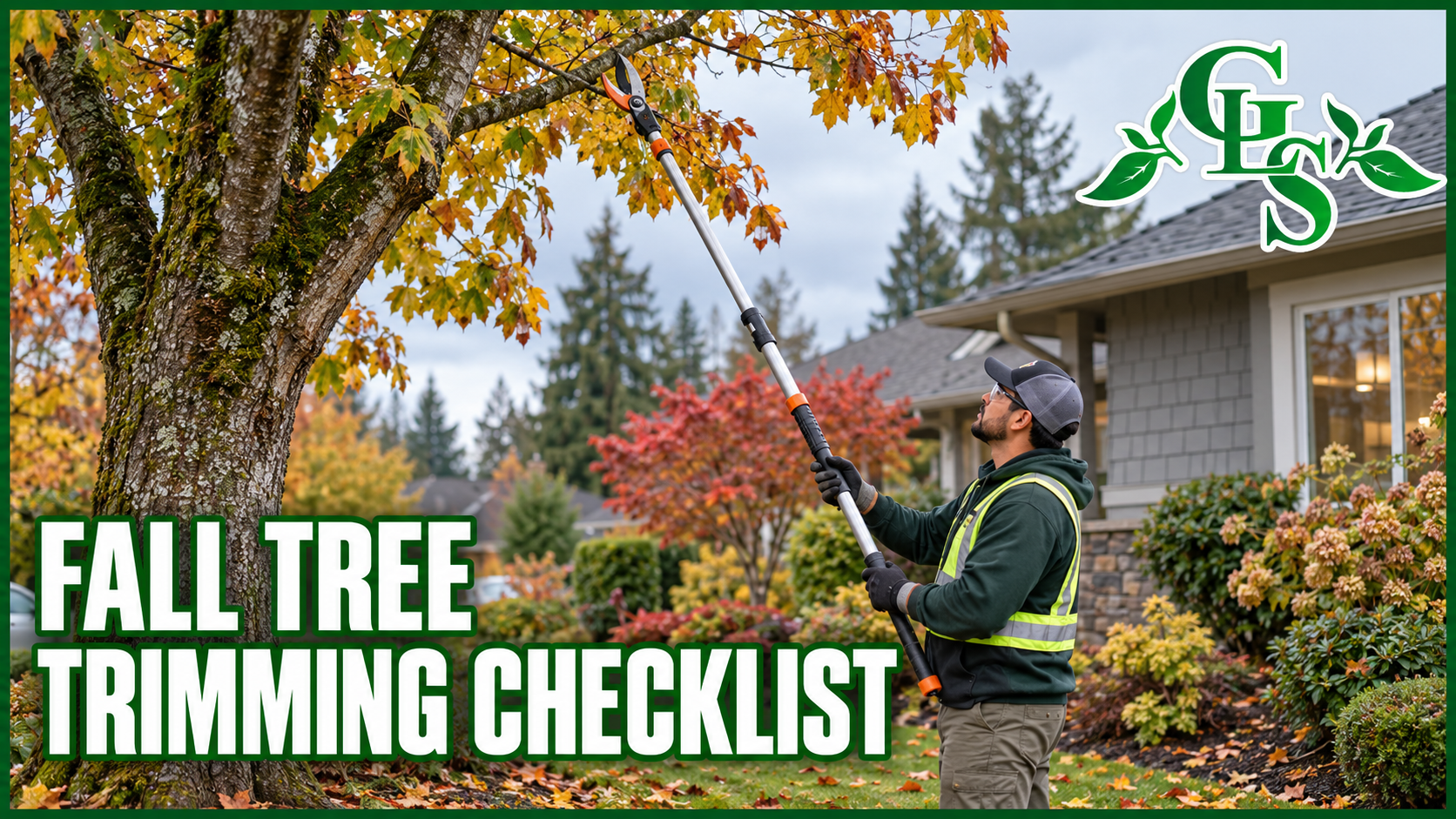
Walk around your property on a dry day and look up from several angles. You don’t need to climb the tree to spot many common warning signs.
- Check for dead branches with no leaves or buds.
- Look for fresh cracks, splits, or hanging limbs.
- Notice branches rubbing the roof, siding, fence, or one another.
- Check whether the trunk has new cavities, decay, or damaged bark.
- Look at the ground for lifting soil or newly exposed roots.
- Make sure branches don’t block driveways, sidewalks, or sightlines.
- Check trees near outdoor seating, play areas, and parked vehicles.
- Keep people and equipment well away from utility lines.
Tree care is only one part of getting a yard ready for wet weather. You can review our full landscaping services if your fall list also includes cleanup, drainage-related landscape work, fencing, or other outdoor projects.
When Tree Work Isn’t a DIY Job
Small branches that can be reached safely from the ground may be manageable with the right hand tools. The job changes when a ladder, chainsaw, climbing equipment, or work near a structure is involved.
Don’t attempt to cut a limb that could fall toward a person, building, vehicle, or utility line. Storm-damaged trees can also hold tension in ways that are difficult to see. A branch may move suddenly when cut.
If the tree is large, leaning, badly damaged, or close to electrical lines, get the right professional involved. Safety comes first.
The Bottom Line
The best time to trim a tree depends on why you’re trimming it. Dead, broken, diseased, and hazardous branches should be addressed when they’re found. Healthy branches that only need shaping can often wait until the dormant season.
So, use October as your inspection month. Look for the problems that winter wind, rain, snow, and ice could make worse. Then deal with the real hazards without removing more healthy growth than necessary.
You can request a free estimate from Garcia’s Landscaping, or call us at 360-984-7342. I’ll help you decide what needs attention now and what can safely wait.
Frequently Asked Questions
Is fall a good time to trim trees in Vancouver, WA?
Fall is a good time to inspect trees and remove dead, damaged, diseased, or hazardous branches. It usually isn’t the best time for heavy pruning or major reshaping. Late winter is often better for larger structural work.
Should I trim branches before a windstorm?
If you see a clearly dead, cracked, hanging, or hazardous branch, have it evaluated before severe weather arrives. Don’t rush into unsafe ladder or chainsaw work because a storm is forecast.
Can trimming make a tree more vulnerable to wind?
Poor pruning can. Removing too much interior growth or leaving foliage only at the ends of long limbs can increase stress during wind. Selective, properly placed cuts are safer than severe thinning.
Can I trim a tree near a power line?
No. Keep yourself, your tools, and your equipment away from power lines. Contact the utility or a qualified tree professional who is authorized and equipped for that work.
How do I get an estimate for tree service?
Send us a few details about the tree and where it is located. Garcia’s Landscaping serves Vancouver and communities throughout Clark County and the surrounding area.